As someone who’s followed the rapid rise of OpenClaw (formerly Clawdbot, then Moltbot), I find the current frenzy both fascinating and deeply frustrating.
Many users are genuinely excited: the open-source agent delivers proactive automation across apps like Telegram and email, persistent memory, and even agent-to-agent interactions on Moltbook. People describe mind-blowing setups—autonomous task squads, novel social dynamics among agents, and a sense of pioneering something new. The community growth and shared skills feel empowering, especially when run locally on affordable hardware.
But the downsides hit hard. API costs from frontier models explode during active use or loops, turning what starts as fun into an expensive novelty. Security is a nightmare: exposed control panels leak credentials, broad system access invites prompt injections and exploits, and researchers warn of credential theft or remote execution risks. Frequent rebrands stem from trademark issues and scams, while much of the viral “culture” on Moltbook feels like overhyped, human-prompted noise rather than true emergence—wasting time and tokens without delivering proportional value.
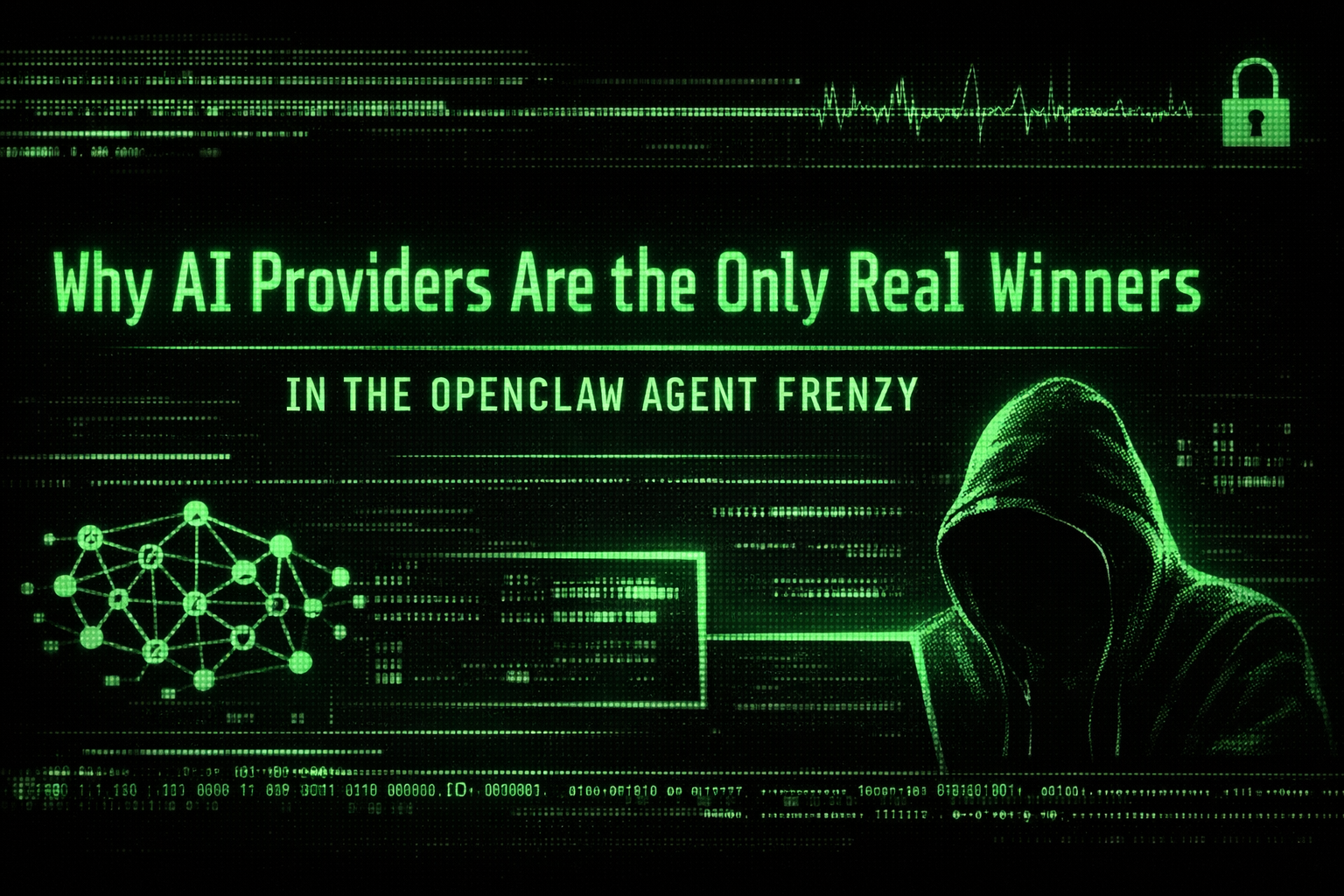
This leaves me exhausted by the illusion of progress. The only consistent winners are the AI providers—OpenAI, Anthropic, xAI, Google, and others. Every spawned agent, context refresh, or autonomous interaction burns tokens at scale, generating steady revenue for their inference infrastructure.
It echoes the 1849 California Gold Rush: prospectors poured resources into chasing gold but mostly came up empty, while suppliers of tools—pans, clothing, picks—profited reliably.
Here, experimenters (users and developers) are the prospectors, investing time, compute, and money in pursuit of capability. The “gold” of sustained, high-value autonomy remains elusive amid the chaos. The shovels? API credits and cloud inference from the major providers, who capture value from widespread adoption no matter the individual outcomes.
OpenClaw has real promise for practical agentic AI, but the imbalance frustrates me: community effort largely subsidizes centralized providers with limited net gains for most of us. We need more focus on security, cost efficiency, and local models to shift the value back toward users.
2 min read
332 words